

Executive Summary
The EU One Stop Shop (OSS) is a special VAT scheme that allows sellers making B2C cross‑border supplies within the EU to declare and pay VAT in a single Member State. You usually register once (e.g., in Poland), apply the VAT rate of the buyer’s country, and file one quarterly OSS return covering all Member States of consumption. The EUR 10,000 EU‑wide threshold applies to combined B2C distance sales of goods and TBE services; above it you must tax in the customer’s Member State. Nil returns are required if no supplies were made. Keep OSS records for 10 years.
What is the One Stop Shop (OSS)
The One Stop Shop (OSS) is the EU’s simplified VAT reporting framework for business‑to‑consumer (B2C) supplies across borders within the EU. It extends the former MOSS (for digital services) to cover intra‑EU distance sales of goods and a broad set of services to EU consumers where the place of taxation is in the customer’s Member State.
Scope: B2C distance sales of goods & selected services
OSS has three variants:
- Union scheme – for taxable persons established in the EU (and certain non‑EU suppliers) selling goods B2C across borders within the EU and services to EU consumers in Member States where they are not established.
- Non‑Union scheme – for non‑EU suppliers of services to EU consumers.
- Import OSS (IOSS) – separate scheme for distance sales of goods imported from third countries in consignments ≤ EUR 150 (covered later under OSS vs IOSS).
EU‑wide EUR 10,000 threshold – how it works in practice
Across the entire EU, a single EUR 10,000 (net/year) threshold applies to your combined B2C intra‑EU distance sales of goods plus TBE/digital services.
- Below the threshold, you may apply home‑country VAT and report domestically (optional choice to tax in customer’s country still possible via OSS).
- Above the threshold, the place of supply shifts to the customer’s Member State, and you should apply that country’s VAT rate, reporting through OSS.
Practical tip: monitor threshold usage group‑wide and across all sales channels (own shop + marketplaces) because the threshold applies EU‑wide, not per country.
How the OSS VAT scheme works
At a high level, you register once in your Member State of identification (MSI) (e.g., Poland), submit one electronic quarterly OSS return and pay a single amount. Your MSI will split and remit the VAT to each Member State of consumption.
Member State of identification vs. Member States of consumption
- MSI is the country where you register for OSS and file/pay the consolidated return (e.g., Poland for Polish‑established sellers).
- Member States of consumption are all the countries where your EU customers are located and where VAT is due.
Your OSS return breaks down sales per country, per VAT rate, and per tax base.
VAT rates & currency handling in OSS
You must charge the correct local VAT rate of the customer’s country (standard or reduced, as applicable). Keep a rate matrix and update it regularly. Returns are filed in the MSI currency (PLN if Poland), but sales can be recorded in your transaction currency—ensure correct conversions on the return date using the prescribed FX source (e.g., ECB rates).
Who must register for OSS
OSS is optional by law but becomes de facto required once you exceed the EUR 10,000 EU‑wide threshold and wish to avoid multiple local registrations across the EU.
EU vs non‑EU sellers; marketplaces as deemed supplier
- EU sellers: may use the Union scheme for B2C distance sales of goods and services where they are not established.
- Non‑EU sellers:
- services to EU consumers → Non‑Union scheme (choose any MSI),
- goods imported ≤ EUR 150 → potentially IOSS via an intermediary (unless established in certain countries with mutual assistance).
- Marketplaces/platforms can become deemed suppliers for (i) intra‑EU supplies by non‑EU sellers and (ii) imported consignments ≤ EUR 150. In such cases, the platform is responsible for charging and remitting VAT for those supplies (the underlying seller still has record‑keeping and invoice/contractual obligations).
When OSS is optional vs. de facto required
If your B2C cross‑border sales are occasional and below EUR 10,000, you may keep domestic VAT. Once you cross the threshold (even mid‑year), applying local VAT in each buyer’s country without OSS would usually require multiple VAT registrations. Therefore, OSS becomes the practical way to comply.
OSS VAT reporting rules
What you must keep on file (10 years)
Maintain transaction‑level records sufficient for tax authorities to verify your return, including:
- customer’s Member State determination (use two non‑contradictory pieces of evidence for digital services),
- product/service, VAT rate, tax base, VAT amount, invoice number/date,
- corrections, refunds, returns, discounts, vouchers, shipping charges.
These OSS records must be retained for 10 years from the end of the year of the transaction and be made electronically available upon request to the MSI or any Member State of consumption.
Invoicing & evidence of customer location
For digital/TBE services, collect two consistent evidence items (e.g., billing address + IP, bank BIN country, SIM country code). For goods, ensure shipping/delivery documentation (and platform data where applicable) supports the place of supply.
Payments, corrections & exclusions
- You file one quarterly return per scheme (Union or Non‑Union).
- Nil returns are mandatory when no supplies were made.
- Corrections to prior periods are made in a subsequent OSS return (do not amend historic returns).
- Exclusions: domestic supplies, B2B supplies, margin schemes etc., are outside OSS and remain in domestic returns.
Benefits of the OSS system
- VAT simplification EU: one registration, one payment, one quarterly return.
- Cost reduction: fewer local VAT registrations and filings.
- Lower risk: standardised process and centralised audit trail for cross‑border VAT reporting.
- Scalability: supports multi‑country expansion without immediate local registrations.
OSS vs IOSS
OSS covers intra‑EU B2C distance sales of goods and certain services where goods already are in the EU.
IOSS (Import One Stop Shop) covers distance sales of imported goods in consignments up to EUR 150. With IOSS, VAT is charged at checkout and customs release is faster; without IOSS, the customer may face import VAT on delivery.
Typical flows
- EU warehouse → EU consumer (cross‑border): OSS (Union).
- Non‑EU seller → EU consumer, goods shipped from outside the EU, consignment ≤ EUR 150: IOSS (platform may be deemed supplier).
- Consignments > EUR 150: IOSS not available; normal import + domestic VAT rules apply.
OSS registration process
Poland: VIU‑R filing, authority & channels
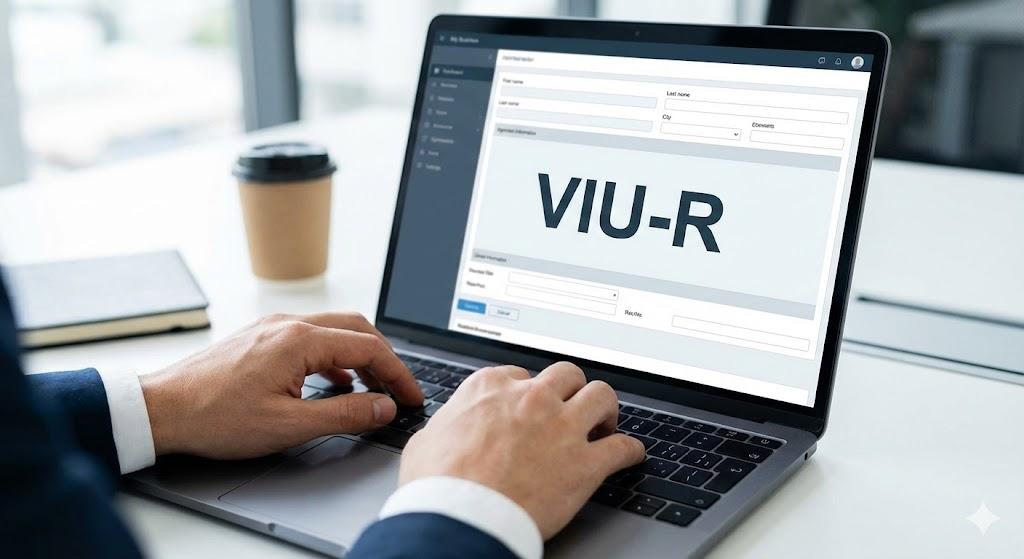
If Poland is your MSI, register via form VIU‑R to the Head of the Second Tax Office Warsaw‑Śródmieście (Drugi Urząd Skarbowy Warszawa‑Śródmieście). From 2025, you can submit VIU‑R and VIU‑DO electronically through e‑Urząd Skarbowy. Paper and portal routes remain available for specific cases.
Activation: after acceptance, you’ll receive confirmation and your OSS account will be visible in the MSI portal. You can start reporting from the next quarter or from the date stated in your registration (for Non‑Union, from the first supply after registration). Update registration data promptly when circumstances change (e.g., new warehouses, contact details).
Quarterly OSS returns
Deadline: submit the OSS VAT return (Union/Non‑Union) and pay by the end of the month following the quarter (e.g., Q1 → by 30 April).
If no supplies were made → file a nil return.
Currency: returns in PLN if Poland is your MSI; apply the required FX for conversions.
Corrections: include adjustments for prior periods in the current return (with narrative/reference).
Quick reference – OSS deadlines
| Quarter | Period | Filing & payment deadline |
| Q1 | Jan–Mar | 30 April |
| Q2 | Apr–Jun | 31 July |
| Q3 | Jul–Sep | 31 October |
| Q4 | Oct–Dec | 31 January (following year) |
VAT obligations for e‑commerce sellers
Pricing, VAT rate mapping, shipping & returns
- Maintain a VAT rate library by country and product category; test pricing VAT‑inclusive to avoid margin erosion when rates differ.
- Clarify shipping charges VAT treatment; include them in the taxable amount where required.
- Set procedures for returns, partial refunds, discounts, vouchers and credit notes to reflect corrections in OSS properly.
Marketplace sellers: who reports what
- If a marketplace is deemed supplier, it typically collects and remits VAT for those covered transactions (you still keep records and may need OSS for your own direct sales).
- If you are the supplier (e.g., own web shop), you charge the correct local VAT and report via OSS.
Common OSS compliance issues
- Wrong country VAT rate – use certified rate databases and periodic QA.
- Mis‑located customer (digital services) – collect two non‑contradictory evidence items and monitor for VPNs/roaming.
- Currency errors – fix FX source/timing and document methodology.
- Refunds/returns timing – reflect in OSS via adjustments in the period when known.
- Mixing B2B and B2C – ensure customer status validation (VAT number, business onboarding).
- Inventory across borders – storing stock in another Member State may trigger local VAT registration outside OSS for domestic supplies/stock movements.
Practical OSS compliance checklist
✔ Decide MSI and register (VIU‑R).
✔ Build EU VAT rate matrix and map products.
✔ Implement customer‑location evidence (digital services).
✔ Automate country split, FX, refunds/discounts, and audit trail.
✔ File VIU‑DO quarterly (nil if needed) and pay on time.
✔ Keep 10‑year records and respond to information requests.

FAQ
Can micro‑businesses use OSS?
Yes. If you are below EUR 10,000 EU‑wide, you can continue to apply home‑country VAT; you may opt in to OSS to simplify future growth.
Does OSS cover B2B sales?
No. B2B supplies are outside OSS (reverse charge or local VAT rules apply).
Non‑EU sellers and OSS/IOSS – what’s the difference?
Non‑EU service providers can use Non‑Union OSS; non‑EU goods sellers shipping from outside the EU typically use IOSS for consignments ≤ EUR 150 (often via an intermediary). Larger consignments follow standard import + domestic VAT rules.
Is invoicing mandatory under OSS?
Invoicing rules are mostly domestic; many Member States do not require an invoice for typical B2C web orders, but you must keep OSS records for 10 years and show them electronically on request.
Where can I file in Poland?
Through e‑Urząd Skarbowy for VIU‑R (registration) and VIU‑DO (returns), with the competent authority being the Second Tax Office Warsaw‑Śródmieście.
Related Articles
- Distance sales in the EU – rules & thresholds
- Place of supply of services – EU & Poland
- Cash registers for distance sellers in Poland
External references (informative)
- European Commission, VAT One Stop Shop (OSS) portal.
- Polish Ministry of Finance, OSS registration.