
Entering the Polish Market: The Ultimate Tax & Legal Compliance Guide for Foreign Investors
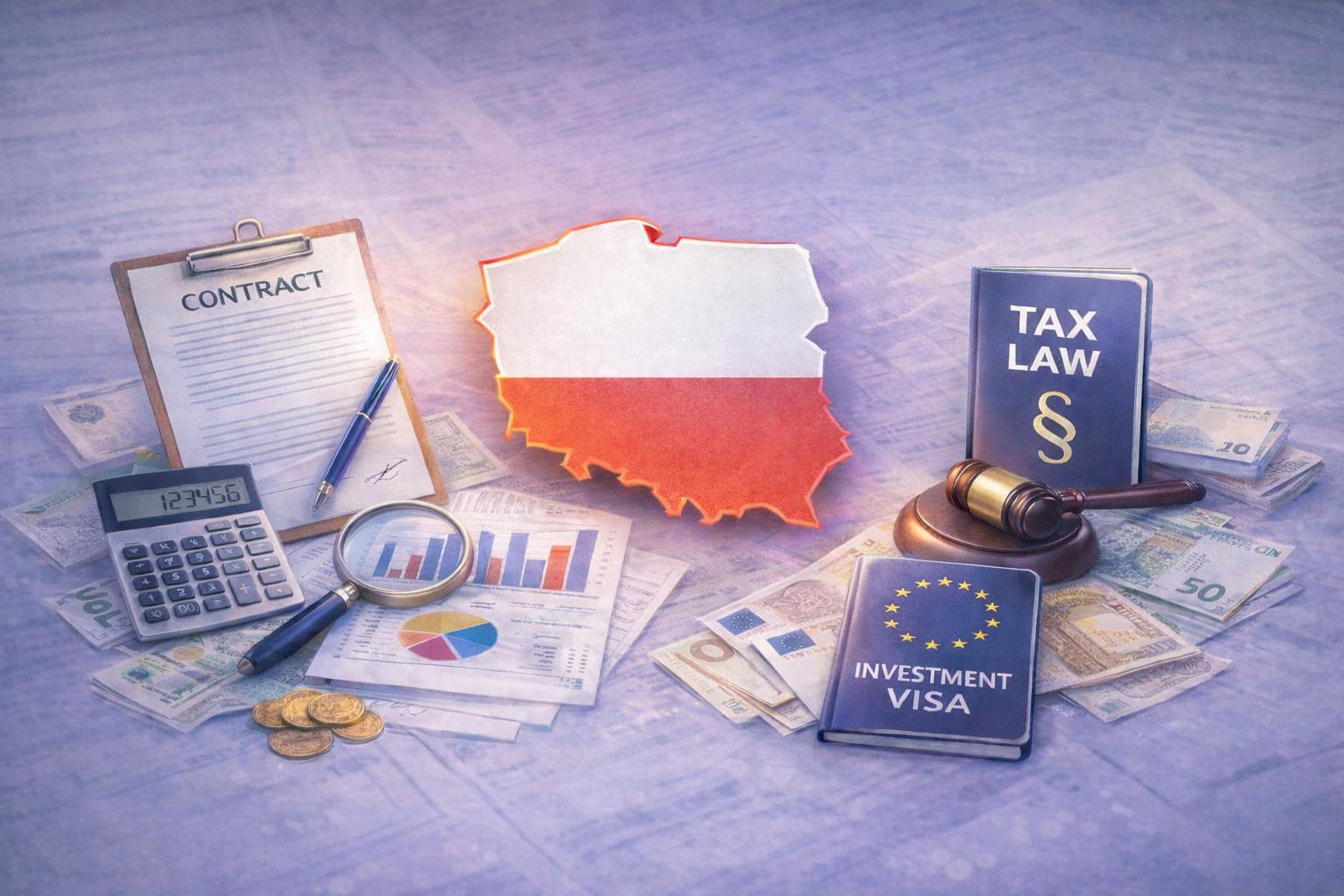
Entering the Polish market is increasingly perceived by foreign investors as a strategic gateway to the European Union. Poland combines economic stability, EU regulatory alignment, and access to a large, skilled workforce, making it one of the most attractive jurisdictions in Central and Eastern Europe. At the same time, the Polish regulatory environment is highly formalized, with strict tax enforcement and rapidly evolving compliance obligations, particularly for foreign entities.
As Polishtax, we operate as your Gateway to Poland for international investors. Our role extends beyond technical compliance – we support foreign businesses in building legally secure, tax-efficient, and scalable operations in Poland. This guide offers a structured overview of the most critical tax and legal compliance areas foreign investors must address when entering the Polish market.

Why Poland attracts foreign investors
Poland’s attractiveness as an investment destination is driven by a combination of macroeconomic strength and targeted government support. A cornerstone of Poland’s investment policy is the Polish Investment Zone, which allows eligible investors to benefit from corporate income tax exemptions across the entire country, not only in designated economic zones. In practice, the exemption is available subject to obtaining a decision on support and meeting regional aid criteria. Incentives are granted based on factors such as investment value, project location, and job creation, enabling tailored support for both large multinationals and mid-sized foreign companies [1].
Key advantages of Poland as an investment destination include:
- Full access to the EU single market,
- Competitive labor and operational costs,
- A diversified economy with strong industrial and service sectors,
- Government-backed investment incentives.
Together, these elements position Poland as a long-term strategic base rather than a short-term cost-saving location.
Entering the Polish market: choosing the right legal structure
Selecting the appropriate legal structure is one of the most consequential decisions in a Polish market entry strategy for foreign companies. The majority of investors choose a limited liability company (Sp. z o.o.), which allows full foreign ownership, limits shareholder liability, and is widely recognized by Polish banks, authorities, and business partners.
From a tax and legal perspective, the choice of structure affects profit repatriation, tax rates, reporting obligations, and exposure to permanent establishment risks. Early-stage structuring decisions should therefore be aligned with the investor’s long-term operational and exit strategy, not merely with registration convenience [2].
Company formation in Poland for foreigners
Company formation in Poland is procedurally accessible but documentation-heavy. Both EU and non-EU investors may establish Polish companies. However, the process requires strict adherence to formal requirements such as articles of association, registration of management board members, and accurate classification of business activities.
Foreign investors should also consider substance requirements and local governance expectations, especially where Polish entities form part of a broader international group structure. Proper formation planning significantly reduces future compliance and audit risks [3].
Core steps typically include:
- Preparation of corporate documentation,
- Approval of articles of association,
- Registration with the National Court Register,
- Tax identification and statistical registration,
- Opening a Polish bank account.
In practice, a well-planned company formation process determines not only the speed of market entry, but also the long-term tax efficiency and regulatory stability of the investment. For foreign investors, early coordination of legal, tax, and governance aspects is a decisive factor in minimizing compliance risk and ensuring sustainable operations in Poland.
VAT registration in Poland for foreign investors
VAT compliance is often the most operationally challenging area for foreign investors entering Poland. VAT registration becomes mandatory when a foreign entity carries out taxable activities such as domestic sales, imports or the use of local warehousing. In reality, the VAT trigger moment is frequently underestimated by foreign companies, particularly in cross-border supply chain and logistics models.
The registration process requires transaction-level analysis and clear documentation of business activities. Mistakes at this stage may lead to delayed registration, increased scrutiny from tax authorities, or retrospective assessments [4]. Early VAT planning and procedural alignment with Polish tax authorities significantly reduces the risk of operational disruption during the initial phase of market entry.
Case study: Swiss company entering the EU market via Poland
In one of the cases documented by Polishtax, a Swiss company planned to expand its European sales by sourcing goods from Polish suppliers and delivering them directly to a customer in Italy. From a commercial perspective, the structure appeared efficient and straightforward, allowing the business to leverage Poland’s manufacturing base while serving the EU market.
As the transaction was analyzed in detail, however, the cross-border supply chain revealed important tax compliance implications. Despite having no physical presence in Poland, the Swiss entity was required under Polish VAT law to register for VAT locally, due to the specific supply chain structure and place-of-supply rules. As a non-EU company without an establishment within the European Union, it also had to appoint a fiscal representative, where required, to properly fulfill its VAT reporting and payment obligations.
This real-life example, described in detail in Polishtax’s article about VAT registration in Poland, illustrates how seemingly simple international trade structures can trigger complex local tax requirements. For foreign investors entering the Polish market, early analysis of supply chains and VAT exposure is therefore a critical element of effective market entry planning.

Practical steps to opening a business in Poland
Beyond legal registration, foreign investors must implement operational frameworks that support ongoing compliance. This includes accounting systems aligned with Polish standards, internal reporting procedures, and communication protocols with tax authorities.
A structured implementation phase ensures that legal compliance translates into operational reality, minimizing disruptions during the first months of activity [5].
| Operational area | Key considerations |
| Banking | Local account opening, authorized signatories |
| Accounting | Polish GAAP (or IFRS where permitted) |
| Reporting | VAT, CIT, statistical filings |
| HR & Payroll | Local rules for human resources management and payroll management in Poland, if the entity hires employees |
| Governance | Management board duties |
Taken together, these operational elements form the practical backbone of regulatory compliance in Poland and should be implemented in parallel rather than sequentially. For foreign investors, early coordination of banking, accounting, reporting, and governance functions significantly reduces start-up friction and ensures business continuity from the first day of operations.
Official tax guidance for foreign investors
The Polish Ministry of Finance provides official guidance outlining the tax framework applicable to foreign investors. Authorities emphasize transparency, documentation, and economic substance, particularly for cross-border transactions and group structures. This guidance serves as a practical benchmark for how tax authorities interpret and apply statutory rules in real-life investment scenarios.
Aligning internal tax policies with official interpretations is increasingly important, as audits focus not only on formal compliance but also on the business rationale behind transactions [6]. Foreign investors who proactively align their internal procedures with administrative practice are significantly better positioned to manage audit risk and defend their tax positions.
Fiscal representation in Poland: a key requirement for non-EU businesses
For non-EU entities, with the exception of the UK, Norway, and possibly Switzerland in the future, fiscal representation is mandatory under Polish VAT law, depending on the country of establishment and transaction profile. A fiscal representative acts as a liaison with tax authorities and shares responsibility for VAT obligations, including reporting and payment. From a practical standpoint, the fiscal representative also plays a key role in ensuring timely communication with authorities and reducing the risk of procedural errors.
This requirement is particularly relevant for non-EU companies unfamiliar with EU VAT systems and serves as a critical risk-mitigation mechanism. Appointing a qualified fiscal representative early in the market entry process significantly enhances compliance certainty and operational continuity. Foreign investors seeking a deeper understanding of procedural obligations may refer to the detailed rules for fiscal representation for non-EU companies, which outline practical requirements and compliance responsibilities in Poland.

E-invoicing and KSeF: digital compliance in Poland
Poland is rapidly digitalizing its tax administration through the National e-Invoicing System (KSeF), representing a fundamental shift in how transactional data is reported to tax authorities. Under the rollout, businesses will be required to issue structured electronic invoices via a centralized government platform, which significantly alters traditional invoicing, accounting, and document-archiving workflows. For foreign investors, KSeF compliance should be treated not as a purely technical requirement, but as a broader operational and governance challenge. For foreign investors, KSeF compliance should be treated not as a purely technical requirement, but as a broader operational and governance challenge. For foreign companies seeking a more in-depth overview of implementation and compliance risks, contact us for detailed guidance on system integration and procedural readiness.
From a practical perspective, KSeF implementation affects multiple areas of business operations, including:
- Integration of ERP and accounting systems with the KSeF platform,
- Redesign of internal invoicing and approval processes,
- Alignment of cross-border billing structures with Polish reporting standards,
- Training of finance and accounting teams responsible for invoice issuance.
Foreign companies must ensure that their ERP and accounting systems are technically and procedurally prepared, especially where invoicing is managed outside Poland [7].
Early technical assessment and coordinated implementation significantly reduce the risk of operational disruption as e-invoicing obligations become mandatory.
Labor law compliance for foreign employers
Employing staff in Poland involves strict compliance with labor law, social security, and immigration regulations. Recent reforms introduced additional obligations for employers hiring foreign workers, increasing documentation and procedural oversight, particularly with respect to work permits, residence status, and reporting duties. These changes require foreign employers to closely coordinate HR, payroll, and legal functions to avoid administrative errors and penalties.
Labor law compliance is no longer a secondary issue – it is a core element of investment risk management for foreign employers [8]. In practice, non-compliance in this area may result not only in financial penalties but also in operational restrictions that directly affect business continuity and workforce stability.

Corporate income tax in Poland: what investors must know
Corporate income tax remains a central concern for foreign investors operating in Poland. Tax rates vary depending on company size and status, and are accompanied by extensive transfer pricing and documentation obligations. In reality, these requirements demand a high level of internal coordination between finance, tax, and management functions, particularly within international group structures.
Strategic tax planning must therefore integrate operational reality, regulatory expectations, and long-term business objectives to ensure stability and predictability [9]. Well-designed corporate tax strategies not only mitigate compliance risk but also support sustainable growth and investor confidence. For a detailed overview of corporate income tax rules, rates, and obligations in Poland, see also Poland CIT rates and rules on Polishtax.
Polishtax: your gateway to the Polish market
Entering the Polish market requires an integrated approach that connects tax, legal, accounting, and HR compliance into a single, coherent operational framework. Fragmented or purely reactive compliance models often lead to inefficiencies, elevated risk exposure, and delayed decision-making, particularly for foreign investors navigating an unfamiliar regulatory environment. As Polishtax, we support foreign investors throughout the entire lifecycle of their Polish operations – from initial market entry strategy and entity structuring to ongoing tax compliance, regulatory reporting, and long-term growth planning.
Our role goes beyond traditional advisory delivery. We act as a strategic partner to international businesses, combining local regulatory expertise with an international business mindset, and helping our clients build sustainable, scalable, and fully compliant operations in Poland that support long-term value creation rather than short-term execution alone.
Turning regulatory complexity into investment advantage
Poland offers significant opportunities for foreign investors, but realizing their full potential requires more than a formal market entry. Long-term success depends on informed planning, disciplined execution, and a deep understanding of how tax, legal, digital reporting, and labor law obligations interact within the Polish regulatory framework. These elements form an interconnected compliance ecosystem in which shortcomings in one area often trigger risks in others.
As a trusted Gateway to Poland, Polishtax supports foreign investors in transforming regulatory complexity into a strategic advantage. By combining local expertise with an international perspective, we help businesses operate with confidence, maintain full compliance, and build sustainable, value-driven operations in the Polish market. Early, well-coordinated advisory support often proves decisive in achieving predictable and compliant market entry.

Frequently asked questions (FAQ)
Why invest in Poland?
It serves as a strategic EU gateway offering economic stability and access to incentives under the Polish Investment Zone, subject to obtaining a decision on support and meeting regional aid criteria.
What is the best legal structure?
Most foreign investors choose a limited liability company (Sp. z o.o.) for its limited liability and 100% foreign ownership.
When is VAT registration required?
It is mandatory for domestic sales, imports, or local warehousing. Non-EU companies may need to appoint a fiscal representative, depending on their country of establishment and transaction profile (as required under Polish VAT law).
What is KSeF?
It is a digital e-invoicing system, planned to become mandatory, that requires integrating ERP systems with the Polish government platform.
What are the labor law requirements?
Employers must strictly follow the Labor Code, including reforms introduced in 2024-2025 affecting the employment of foreign workers.
How to form a company?
Key steps include notarizing documents, registering with the National Court Register (KRS), and opening a Polish bank account.
Bibliography
[1] Poland Investment and Trade Agency (PAIH). Polish Investment Zone – Investment Incentives. Access date: January 20, 2026.
https://www.paih.gov.pl/en/why-poland/investment-incentives/polish-investment-zone/
[2] Ministry of Finance. Investor’s Tax Guide. Access date: January 26, 2026.
https://podatki-arch.mf.gov.pl/en/news/investors-tax-guide
[3] PAIH. Doing business in Poland – business activity step by step. Access date: January 26, 2026.
https://www.paih.gov.pl/wp-content/uploads/0/141601/141619.pdf
[4] European Commission. VAT rules for cross-border sales (EU VAT Directive). Access date: January 26, 2026.
https://taxation-customs.ec.europa.eu/taxation-1/value-added-tax-vat_en
[5] PAIH. Doing Business in Poland – Investors’ Guide 2024. Access date: January 26, 2026.
[6] Ministry of Finance. Investor’s Tax Guide. Access date: January 22, 2026.
https://podatki-arch.mf.gov.pl/en/news/investors-tax-guide/
[7] KSeF National e-Invoicing System. Access date: January 26, 2026.
https://krajowysystemefaktur.pl/?gad_source=1#
[8] Ministry of Family. Labour and Social Policy. Employment of foreigners 2025-2026 rules. Access date: January 26, 2026.
https://psz.praca.gov.pl/dla-pracodawcow-i-przedsiebiorcow/zatrudnianie-cudzoziemcow
[9] Ministry of Finance. Corporate Income Tax rates and rules. Access date: January 26, 2026.